Sunday, 8 February 2015

      Hello. I’m coming to the end of my 6 week placement. I am going to miss the kids. Transient. I don’t know how I feel about going back to my proper school. I’m scared they’ll all expect me to be wonderful now. Like, I’ve done my tour of duty and now I’m back; they assume I’ll have a whole new set of skills, a whole new mindset, a dark, brooding intensity to my practice, which speaks of things that I cannot, which alludes to things I have seen that they will never comprehend. But I’m pretty much exactly where I was 6 weeks ago. If anything, I feel I’ve regressed because I wasn’t 100% under the cosh at this school. There wasn’t as much pressure, expectation, responsibility. I was allowed to glide, to sit back. I think I work best when I’m operating at maximum capacity. That’s when I learn quickest, think smartest, plan efficient-est. Like when the steam train was invented, everyone was all like “oh no, 40mph. How will the train driver has fast enough reactions to deal with 40mph!?” But, of course, he did. And people now have reactions that enable them to drive at 60, 70, 80mph. Formula 1 drivers have reactions doing speeds of over two times that. The faster you go, the faster your reactions can be. Obviously, there’s a limit, but it’s not 40mph. I feel that at my host school, I’m expected to be a Formula 1 racing driver. There, my reactions were honed to perfection, lightning quick, I was top of my game, I was operating at the highest intensity. At this second school placement, I’m the languishing train driver, puffing along at 40mph. There’s no expectations of my reactions here. I have time to do whatever I please; sit back, feet up, cap tilted over my sooty brow to have a nap. I’m not testing myself, I’m not being pushed. And when I go back to the Formula 1 car, I think I’m just going to plough it straight into the tyre wall.
      Anyway, I was at my second school placement for 6 weeks of 4 days (Friday is always training), so here are 24 things I learnt from being on placement and other ideas that have shown themselves to be rather valuable to teaching, arranged in a nice, concise, orderly list:

1.       Use peer assessment as often as possible. Get kids to swap work with a partner and then list what they think is good about the piece of work and what they think needs improved. Use colour coded pens or colour coded post-its for this. Factor in DIRT time for improvement.

2.       Use self assessment as often as possible. Print the Success Criteria in a table and stick it in books, for children to tick off when they think they’ve achieved it. Have them write on post its one thing they feel they learned during the lesson and one thing they need help with. Do a progress arrow or tree where they stick up how confident they feel with a subject at the start of the lesson and then again at the end and see if there’s an improvement. Factor in DIRT time for improvement.

3.       Factor in DIRT time. I think it stands for Dedicated Improvement and Reflection time. Kids to complete comments left, challenges set or any of those peer/self assessment points.

4.       Either commit to a blog or don’t.

5.       Encourage all types of writing. We wrote African stories in English and there was such a wide range of interpretations. On the one hand, reading them, it’s like, these are the ramblings of the insane. There’s not a coherent thought here. On the other, it’s like, wow, bind this shit up and sell it because it’s offering a unique insight into the development and structure of the human psyche. One boy’s story started off with “Once upon a time, in the scorching African Savannah, in the long grasses, a lion and a zebra grew up. They were friends and then Gandalf said to Bilbo-” Oh, wait a minute, hold on. No Gandalf and Bilbo, remember, these are African stories. Use those scenes and characters we talked about. Ok, miss. “Once upon a time, in the scorching African Savannah, in the long grasses, a lion and a zebra grew up. And then Simba said to Mufasa, why can’t I go to the elephant graveyard, dad?” Another girl wrote an entire A4 page that was just one sentence. It was the most comprehensive example of stream of conscious writing since Virginia Woolf. It was a modernist text. It could have been studied on a second year English Literature university course. I photocopied it.

6.       Use games as much as possible in lessons. Games on the Interactive Whiteboard are an obvious one; something the whole class can get behind, but also just regular games. Have a basketball game in phonics where children can take a shot if they get the phoneme right. Use bowling pins in languages, where children get to bowl if they pronounce something right. Chinese Whispers, Slap (the running and hitting picture), Snap, Running Dictation, rock paper scissors, islands. Anything. Find a game and work it in.

7.       Don’t rely on worksheets. Personally, I like the idea of things being learnt my rote. I think it sticks. I learnt up to 12x12 by rote and I can still recall all those timetables now. But kids find it boring. Invent ways to do worksheets where there isn’t actually a worksheet involved: mazes, riddles, colour coded question cards, stations which groups revolve around every few minutes, completing different challenges.

8.       Listen to music in class. If the kids are good, have 5 minutes where they can work in silence, listening to music. Not a revolutionary idea, but one the kids welcome. I started it during wet play because they were being way to noisy but I didn’t think it was right to tell them to shut up during their playtime. So I put the music on and, hey presto, they immediately became quiet.

9.       Use the sanctions/ rewards policy. It makes you look like a good teacher and it reminds kids of their expectations. If a sanction/s rewards policy isn’t obvious, ask. If they don’t have one, invent one. Stickers for good behaviour, minutes lost for behaviour which needs to be improved. The traffic light system is a good one- everyone starts out at 9am with their names on amber. If they’re showing good behaviour, they move up to green. Those who need to improve are moved down to red.

10.   Not all schools have the same behavioural standards. At my second school, there was no expectation on the class to come in quietly and sit down ready for the lesson. I had to expend time and energy to make that happen, which was a shock after the clipped order of my host school. Think on your feet to accommodate this lack of cohesion.

11.   Transitions between lessons are important. The slicker these are, the better influence you have over the behaviour of your class. It also means more time for learning, less wasted on putting books away. Have a routine and a timetable so kids know who’s doing what and when. Make your classroom a slick, military operation.

12.   Maths starters: 42 is the answer. What’s the question? I’m thinking of a number. If I times it by 9 and add 5, I get 50. What was my number? How do you know a triangle is a triangle? Times table Bingo. Place Value bingo.

13.   Watch You Tube clips for Mini Plenaries and get the kids to use their whiteboards to record one interesting thing that they have learnt.

14.   Continually ask for critical feedback from your mentor.

15.   Progress grades and lesson grades are different things. I got a 3 for my lesson grade but a strong 2 for my progress grade. Chin up.

16.   Join in with other members of staff, even if you think they’re insane. You’re there for six weeks/ a term/ a year or whatever. A school is a community. Don’t alienate yourself from it because you don’t agree with how many sugars they have in their tea.

17.   Always do Dance in PE to music. If the internet doesn’t work on your laptop, use someone else’s. If the speakers don’t work in the hall. Find a stereo and CD. If the stereo or CD doesn’t work, get a drum from the percussion stand and beat out a tune. If there isn’t a percussion stand, clap.

18.   Don’t set yourself all of your planning to do in one hit. Do it in a series of short and manageable sessions. In the first, set a skeleton outline for your lessons. Then get up and go do something else. In your next session, fill in that plan a bit, bulk it out. In the next, organise IWB slides. In the next, fill out the plan even more, near 100% complete and make a list of resources needed. In the next session, gather those resources. In the last session, go through your plan and conduct a mental rehearsal of it. Bite size and manageable chunks.

19.   Organise all your PPA time like a timetable. First half hour, do this, then next half hour do that. Stick to the timetable. If something takes longer or you’re stuck on a point, don’t sit staring at the blinking cursor of a computer screen, waiting for inspiration to strike. It’s a waste of time. Make a note of what’s the problem and factor in time to return to it, then move on to the next job. By the time you return to the problem, your mind will be better placed to tease out a solution. Be a well organised, efficient machine. A slick operation.

20.   Keep a notebook/ scrap of paper handy for when interesting ideas strike you.
 I can’t think of the next 4 points and, in the spirit of point 19, I’m not going to sit here racking my brains for the answer. I’m going to go on to my next job, which is watching Batman Begins. There’s a lot of ideas here and I’ve got shelves and shelves of books that are filled cover to cover with even more ideas. They’re all good tips and tricks, and handy to have an understanding or a knowledge of, or a place in your repertoire. But I think being a teacher is more than that. I think being a teacher is having the ability to factor all these wonderful ideas and management tactics into their daily, nay, their hourly, working practice. When those theoretical ideas become practical actions without thought or effort, that’s when you know you’ve made it. It’s no use just sitting on a wealth of ideas. You have to utilise them. It’s not who I am underneath but what I do that defines me. 

Sunday, 11 January 2015

3 Items For the New Year

Hello,

Three subjects for discussions today:


The ephemeral nature of life


I’ve started my second school placement. It’s completely different, in terms of area, size, children, their backgrounds, the parents, the staff, the head, the general atmosphere and expectations at the school. I’ve been there a week and I prefer my host school. Though, I think that’s just because I’ve only been there a week. When I started my host school back in September, I hated that place too, because of the area, the size, the children, their backgrounds, the parents, the general atmosphere and expectations. I’d come from another school last summer, you see, and I just thought that place was ten times better. No, it was more than that; the kids there were ten times better. No class could ever replace them in my affections. And I was wrong because after several weeks at my host school, they were everything to me. They were everything a class should be. And now I’m at this new school and I’m looking at these kids with an upturned nose, thinking ‘oh, who are you? You can never replace my old class. Never ever.’ Then I caught myself. I saw the pattern. In six weeks, will I have forgotten my host school children? Will I only feel I belong to this new class? Everything in this world is so transient. Is nothing forever? You feel you belong to a class, you cling to them, you lament your departure, you pine, you snub your new class. Then, you feel you belong to that new class, you cling to them, you lament your departure, you pine, you snub your new class. Man, it’s depressing. On the plus side, I learnt all the names of the thirty kids in my class before my 2pm lesson on the first day. How do you like those acorns? Yet, in six weeks, I won’t be there anymore and all those kids names will trickle out of my head, like grains of sand in a little hand. Sure, not at first but after six more weeks, then six months, then six years, will I remember any of these kids from this short placement? After sixty years, will I remember the children from my host school? Will I remember the kids from last summer?  Or will my memories of them drift away, into the ether, as I age, and they themselves take on new identities and personas so that, perchance our paths ever cross again, I’ll no longer recognise them, and the deep sense of belonging I felt when standing before them at the front of the class, and even that will be no more than one square of the stretching patchwork of emotions of my youth.


Fairytales

So, my new school. It’s in a little leafy village, the kids are angelic, the parents all read their children stories at night, there’s beautiful rolling hills for playing fields, rabbits and sheep gambol past and the trees come to life and talk to you. It’s ok, though I’m pretty sure the woman who works in reception is a certified witch; like Brothers Grimm type witch. I don’t know why no one has spotted this. She’s defo building chocolate houses in the woods. It’s not just the way she looks but the way she acts. I don’t want to say anymore in case I get found out but she put my hackles up when I spoke to her.

Phonics

This is the term for phonics. For me, at least. Some people have their phonics all wrapped up and sorted and I haven’t even started. There’s two assignments we have to complete and two lesson observations and I’m not exaggerating when I say I know next to nothing about phonics. I know less now than I did in September. I talked to my new school about delivering a phonics programme and they just said “no”. Like that. No follow up. No explanation. “No”. “No?” “No”. I explained that I had all these assignments and observations and they rolled their eyes and said “I won’t tell you what we think of that”. I laughed because the only other alternative was to punch them. I left it there. I plan to go back next week and just bring it up again. And if there’s no support, I’ll have to dob them in to the training provider. Snitch.

Friday, 26 December 2014

12 Emotions of Christmas themed: Lord of the Rings

Whaaaaatsupppp, internet. I haven’t updated in a while because I’ve been busy teaching and shit. Updates from my teaching career: there’s a student in school who I literally hate, I’ve lost sleep out through genuine child-related fear, sheer mirth was had by all at the Christmas production and I’m optimistic about my next placement. Quite a smorgasbord of emotions, I’m sure you’ll agree. I’ve read that people enjoy lists, so, here, below, for your own personal perusal, is a list of emotions that have beguiled me in the last few weeks. 12 Days of Christmas, 12 Days of Trainee Teacher emotions.

I'm watching Lord of the Rings: The Fellowship of the Ring as I type this. My writing, my sentiment, my very purpose is being crafted by the Fellowship that has guided me since 2001.

1. Hate.

There’s a student at school I literally hate. I don’t know why. They are really popular, not too stupid, not too clever, they enjoy a bit of banter, they’re outgoing, polite and take on responsibilities and duties around the school. Great stuff. I just hate them. I’ve got kids who paw at my arm, who cry and throw tantrums, who refuse to work, who run around the class, bouncing off the walls, telling me they haven’t had their medication yet, kids who swear, kids who talk back and I don’t hate any of them. In fact, I quite like them, I feel attached to them. But this other child…man, I don’t get it. All the other teachers love them. I do not.

It started off small, just a mild dislike, but now I actively loathe the little child. I think it’s because they’re too aware of how good they are, how popular, you know? And they’re lazy. It takes me ages to cajole them into getting pen to paper, and the whole time, they’re making wise cracks and being “sassy”. They think they are the bee’s knees. And all the other teachers are on board. But not me. I think it’s because they are capable but they refuse to really engage; they prefer to try to be cool. And whenever you set them a problem, their first impulse is to say “I don’t understand”. They refuse to engage their brain. But they’ll shout out what they think are funny comments. They don’t immediately do as instructed either; either because they’re too lazy to interpret instructions or because they think they’re above it. I don’t know why I’m writing this down. I think I just need to vent; none of the other teachers will hear anything bad against the child. But you will.

2. Guilt (is that an emotion?)

I had two nights of lost sleep in the previous week. The first came because I was sitting in Science, working with a small group and, as I gesticulated in an effort to convey my passion for the subject, the pencil I was holding pierced the back of a student’s hand. Their little hand was wandering into my close personal space, I wasn’t that wild, and I apologised and checked their hand and the
y said it was ok, but later, I caught sight of the child’s hand and there was an actual grey pencil point, surrounded by inflamed, red skin. Shit. I felt so guilty. It was such an accident, such a nothing moment but it really stuck with me. That poor child, just sitting in class, and then wham, attacked by their teacher, in an unprovoked gesture that literally scarred them. It must have actually hurt. Shit. Alongside that, I kept expecting her to report me for abuse or something, and then I’d have to explain myself to the head. Why was I sitting down? Why was I holding a pencil? Why did I not take the child to A&E?

3. Fear

The second night of lost sleep came from a similar scenario. I was at XC club (that became a total failure, btw. I only had about 3 kids in the end. One kid said to me she wasn’t coming anymore because she didn’t like running. Good. Decision), so anyway, I was at XC club and one of my faithful couldn’t take part because he’d sprained his ankle but he requested to stand and watch anyway. No worries. Anyway, on our way into the school, one of the other children didn’t hold the door open for me and the injured boy and it slammed shut on the kid’s injured ankle. He cried out and I think I had an out of body experience. I just drifted away. I felt detached from reality. That’s how terrified I was about the boy doing further injury to himself. He said he was fine and brushed it off but I got him an ice pack anyway and just trotted around after him for about half an hour, making sure the bone wasn’t sticking out of the skin or anything. I lost sleep that night, expecting to go to school the next day and find the boy’s mother there, complaining that her son had been allowed outside, that he’d re-fractured the bone, that it wouldn’t ever heal properly, that he was on double medication for it, who allowed this to happen, where were my safeguarding skills, black mark on my record, cause for concerned, failed QTS.

4. Cognizance (I know this definitely isn’t an emotion but it is necessary)

All paranoia; neither of these events came to anything but, still, it made me think. It made me realise. It made me achieve cognizance. One second could turn around your whole career. One misjudged incident, one misconstrued event and, suddenly, you’re glad you did join a Union. Everything could turn to shit.


5. Impotence

I had to fill out in another class the other day. I was talking to one boy, who was refusing to work, trying to gently encourage him to start writing, trying to create a rapport between us and make him respect the task. He wasn’t having any of it. He kept just talking at me, without taking breath, just, words, words, words, in a high pitch, squeaky little voice. It was like being stuck in a Mickey Mouse clock. Apparently, he had some gripe with the kid sitting next to him. Honestly, I cannot find the language to convey how this kid was talking. It was like the lid of the Ark of the Covenant being lifted and the rays of divine glory shooting out, blasting off people’s faces, left, right and centre. I was such a face. I was being blasted away, by the sheer volume of words that this child could fit into a second, as he fixed me with an intense stare, totally oblivious to the work in front of him. He didn’t pause for breath, so I just overrode him and said “move to that spare desk over there, if he’s winding you up”. That shut him up and he rather quickly gathered his book and his pencil, ready to move. The kid next to him muttered a taunt under his breath and the boy dropped his book, dropped his pencil, grabbed the kid’s head and just started punching him. It wasn’t a single punch but a series of punches. A sentence of punches. I had never witnessed child on child beatings during my teaching career before and I did not know how to react, how to act, how to stop it. I was frozen in utter bewilderment. So, instead of doing anything, I did what everyone else in the class was doing and just stood and watched. The TA reacted better than me and dragged both boys out. I turned around and carried on with the lesson, as though nothing had happened. I highlight this escapade because I envision most scenarios that I might encounter in my daily life as a teacher and how I should deal with them but I’ve never considered what I should do if two children in my care start fighting. I’m reluctant to touch children because of the emotions in 2-4, so I’d be hesitant about getting involved in order to break a fight up. But I can’t just stand and watch again, in the vain hope that the aggressor will run out of steam eventually and the beating with cease. I guess I’ll just have to man up for next time and if kids start pounding each other be prepared to take their hands, like the TA did, and escort them from the class. We don’t get training for that. I think we should. Mandatory training, not just special physical restraint courses. Mandatory training on what to do if two little kids start a-tussling.

6. Mirth      

We had our Christmas production- and it was hilarious. Not all of it, but that’s for another entry. This entry is for hilarity only. We spent so long rehearsing, performing, practicing, acting, cutting out costumes, doing the sets and backdrops, and, on the actual day, 83% of the kids forgot their lines, came on at the wrong times, sung the wrong bits. Oh man, it could have been a scene out of a sitcom. If you’d have told me before that the production would start to come apart, that screws would start to rattle loose as the performance went on, mirth would not have been the emotion I’d have predicted for myself. I’d have said all the other classics; anger, shame, impotence, cognizance. But no, it was mirth. I sat at the back, hidden amongst the unimpressed parents, and laughed and laughed my way through it. Hahaha. Ha. I think perhaps my mirth did stem from a well of shame or humiliation but it is the mirth that stays with me now. The parents around me slumped their shoulders and moaned under their breaths at every new string of opening bars for a song, at every occasion a new character with a new monologue was introduced, every time a child forgot their woods and stood, staring out into the dark audience, hoping for divine illumination. I had to hold my nose to stop the laughter from being audible. I’ve never been in that situation before; physically restraining myself from laughing. I kept catching the eye of a TA who shares my sense of humour and thought my gall bladder might burst.

7.   Anger

Right, so, fucking Christmas production. Hello! All those hours of rehearsing,
performing, practicing, acting, cutting out costumes, doing the sets and backdrops- more than half of these kids aren’t on course for their expected progress. Most of them struggle to spell and do their six times table. Why was so much time wasted on clobbering together an unintentionally hilarious Christmas production? It was stressful- not for me, granted, I’m just a trainee who was told where to stand and what to do, but for the actual teachers, it was stressful. Getting all the lines and songs right and all that jazz, whilst also worrying that targets were not being met, that children who need to make two levels of progress before June were out 3 out of 5 hours of a day, singing. All in all, it was great fun for me but for real teachers, it pretty much pissed them off. And I imagine, when I’m a real teacher, it’ll piss me off too.

8. Sloth

We have an assignment due in January. I spent a day writing mine, after a day planning it, before a
day clattering about with the appendices and referencing and stuff. All in all, a good batch of work, right? Wrong. I read through it after a few days letting it mature in my desk drawer and it was average at best. I’m not even sure there’s a lucid train of thought running through it. It bounces from point to point, rambling from one shoe-horned in quote to another. I suppose that idea isn’t such a huge stretch of the imagination for you reading this blog because I’ve just read through some of my past entries and they’re all a bit like a blind horse going through a maze. But it was a surprise to me. I’ve always fancied myself as a bit of a D.H. Lawrence but it turns out, I’m more like Franz Kafka. And not his coherent stuff either; I’m talking The Castle, with no real plot, no ending, just an entire exercise in linguistic futility. And did I decide to redo the essay upon this revelation, did I steel upon myself to go back and start again, to put in a truly eloquent and impressive piece of work? Did I fuck. I resolved myself to leave it as it was. It was three days work, I wasn’t going back, I wasn’t wading through that again. It was done, it was dead and done.

9. Pride

Is pride an emotion? Well, it's a sin, so here it is. During the holidays, I went back to my parents'
house and, whilst ambling through my old desk, I opened up a drawer and discovered clutter. Clutter, with a capital C. I abhor clutter. I like organisation and structure, I like order and routine; witness my lovely folders, complete with file dividers, flags and colour coded cross referencing system. So, the sight of this drawer was no pleasant to me. I started at once to set it into order. It was all my old university stuff- notes, hand outs, readers and my old assignments. I spent one hour and seventeen minutes reading through feedback from my old assignments. It was like looking through the best of your own profile pictures and masturbating over them. These assignments had not been written in the same spirit as my current assignment. They had been written with creativity, wit, articulacy and sound subject knowledge. And my tutors said pretty much the same thing. I was amazing, I was brilliant, I was D.H. Lawrence. Could I ever be that good again? Did I still possess that talent? I just sat and basked in my own glory for several minutes. What a load of self worship, self wallowing and time wasting. And it leads straight onto the next emotion.

10.   Loyalty

So, now, I have to go back and redo my assignment. I’m not doing it for QTS, I’m not doing it for my students, I’m not doing it for my own pride and career. I’m doing it for 20 year old me, who spent so many hours crafting the perfect essay, ensuring every point threaded together, that every conclusion was carefully teased out and presented, that every piece of evidence was not only necessary to the narrative but enjoyed and treasured. I’m doing it for that person, that ghost, who exists now only in memory. I’m going back to the assignment and I’m going to do that person proud, so that in years time, I may come back and read the feedback from this assignment and think ‘tha
t was a good piece of work. That makes me proud. I must have been D.H. Lawrence back then’.

11.   Hope

I have my second school placement coming up after Christmas. It’s where you go to another school to experience a different cross section of children, from a different year group. I was planning out my lessons the other day, trying to work on my targets from last term, which include using ICT more in class. I wasn’t really sure how to do it, so I put my planning to one side and started drafting out this blog entry, all the time thinking, ‘how to put ICT in my lessons more. How? How? I can get the kids to research stuff in a Webquest type thing (more on that later) but that’s boring after one less. How could they present their work using ICT? How could they showcase it? How could they utilise their ICT skills and show off their work? How? Is there even a way? Am I tormenting myself over a riddle with no answer here?’ I’m hoping you got to the answer quicker than I did. The answer, of course, is, get the kids to create their own classroom blog. Amazing! Stupendous! No one ever had such an idea before! Of course, they have. The internet is awash with classroom blogs. Awash. A. Wash. But still, a good idea, no? Each child can put an entry up, we can have them recording fact files, putting up images, their own research and writing challenges. And it’s something that I can physically show to my visiting tutor and use as evidence for my folders. Who cares if every Teacher, sub and head has already done it? I haven’t. But I’m going to start at this new school. And it is going to be good. And it fills me with hope.

12. I’ve run out of emotions

I think that covers my emotional calendar since last we spoke. Instead of just putting in a token one here and then making a follow up paragraph to explain it below, I decided to just be honest with you guys. The 12 Emotions of Christmas didn’t work. It’s the 11 Emotions of Christmas at best. And I tell you what, guys, that there, that right there, is reflective learning. That is an evaluation. That is formative assessment of work. That is all the skills I have been taught as a teacher. That is a lesson that you can’t tell. That is one that has to be shown. Man, it’s like we’ve reached enlightenment.

That could have been the twelfth emotion. Honesty could have been the twelfth emotion. I could have gone back and changed it. But I didn’t. Because I’m being honest with you guys. Because I’ve reached reflective enlightenment. And reflective enlightenment involves, nay, is founded on, the idea of not erasing your mistakes, not covering up errors, but learning from them, building on from them, using them to inform your greatest achievements. As this entry surely details. D.H. Lawrence eat your heart out.

Sunday, 23 November 2014

Teacher training, Star Wars and nudity.

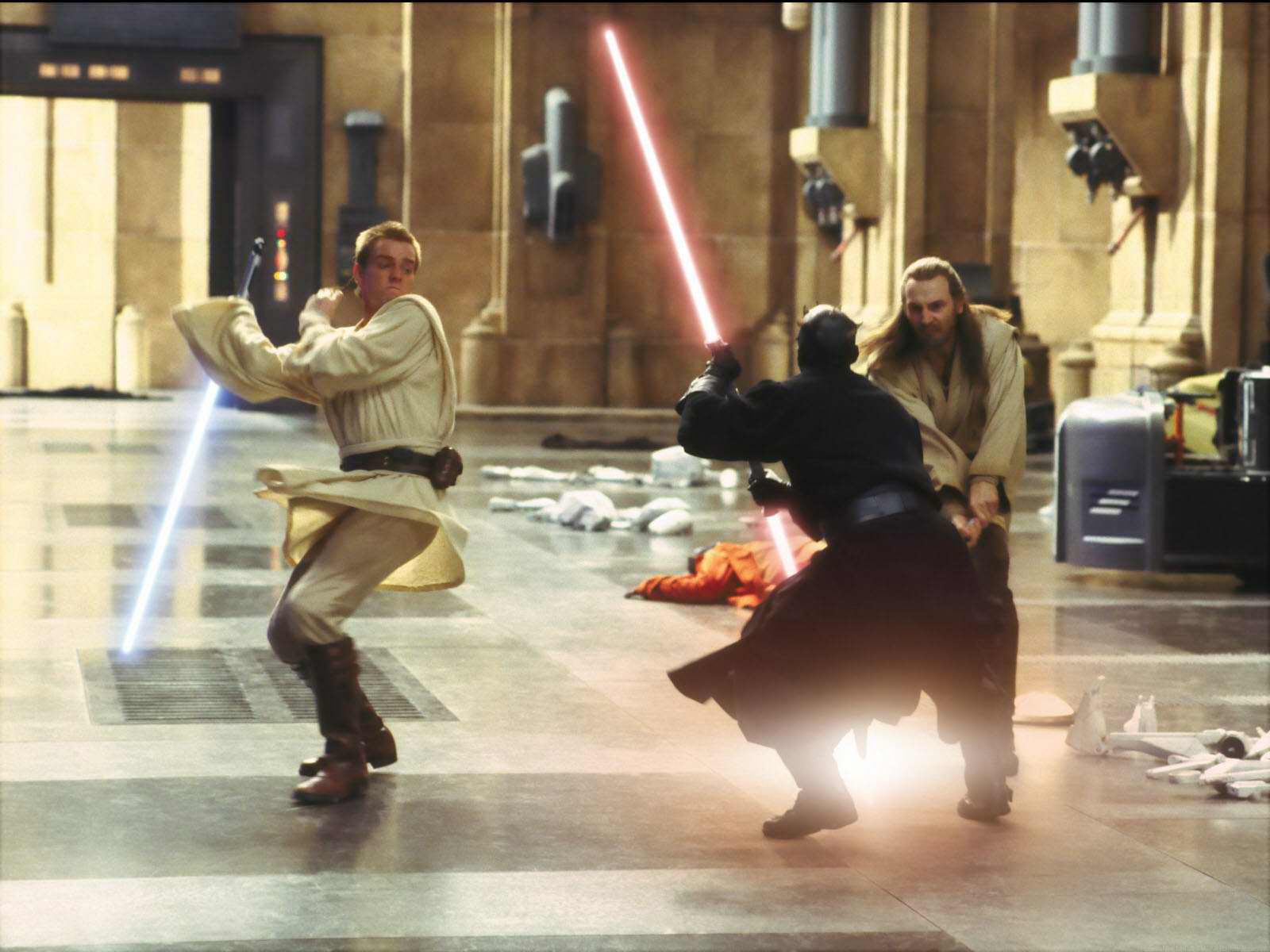
 Half way through term two and I feel alright. I’m keeping up. I feel like that bit in the end of The Phantom Menace, where Obi Wan and Qui Gon are fighting Darth Maul beneath the palace on Naboo, amongst all the power converters. And they’re fighting furiously and elegantly and masterfully and the flow is there and the prestige and the power and the control, but you can see the sweat on the Jedi’s foreheads and they’re starting to get out of breath and you can see them wondering how long is left, how long they can keep this up for, when are they going to break the Sith down and be able to breathe easily again. I don’t yet know whether I’m Qui Gon or Obi Wan, whether Darth Maul is going to cut me down and leave my fallen body on the edge of the waste pit, or whether I’m Obi Wan and I’m going to rise up and win the battle, like a boss.


My point is, the workload HAS increased. I have to plan lessons, prepare resources, teach, evaluate lessons, mark books, find evidence, file evidence , be set targets, achieve those targets, prove I’ve achieved those targets, plan assignments, do assignments, evaluate my assignments, and run my club (I now only have 3 kids at XC club. I think it’s a failure. The 3 kids that come have an unhealthy obsession with me as well; they’re always trailing after me, pawing at my arms, trying to hug me. They don’t care about running, they just want to creep around me. Next term, I might do an Audiobook club and just get the kids to sit quietly and listen to stories, whilst I do marking). I am capable of keeping on top of this workload, I am fighting it elegantly and masterfully, I’m in full flow, but for how long? Will I break it, or will it break me? Will I fall into step with all of this and master its will or will I falter and end up with a double ended lightsabre through my stomach? Who knows. I can only keep fighting, keep doing backwards somersaults onto other walkways, keep using
the force to push my enemy away, keep going.

I noticed something the other day and I’m going to tell you about it now. On a day to day basis, I, my mentor, all the class teachers, the TAs, all the trainees, vet every piece of material we present to the kids. Every story is checked for inappropriate language, distasteful references, pictures that might be distressing or confusing to ten year olds. Anything that presents a less than desirable effect or might elicit awkward questions is discounted. We have to comb through videos on You Tube, trying to find ones that are 100% appropriate for our class; no language, no gruesome cartoons, no poor role models, no adverts that have swearing or car crashes or unwelcome nudity. I was going to show a Blackadder sketch about the Civil War. 5 minutes, perfect for what we were studying. Stephen Fry as a Charles-esque Charles I, Rowan Atkinson as his somewhat loyal Cavalier and Tony Robinson as that same dirty man he always plays, discussing the events of 1649. It set the English Civil War up perfectly, it explained everything, it was funny. But I couldn’t use it because one of them said the word  “bloody” halfway through and Blackadder was threatened with a knife. Move on, find something else. This is the environment we work in. Everything is checked and double checked, purified and presented, squeaky clean, to our children, so as not to corrupt their sweet, innocent minds, so as not to concern them or worry them or teach them bad habits about the darker side of the wide world.

Then, the other day, we went on a school trip. This took up through a high street and I COULD NOT BELIEVE the amount of inappropriate images I saw. The main one was of a woman dressed in a bra and knickers, splayed out on a bed, looking up at the camera with big eyes and her finger in her mouth. This picture, as well, was huge. It covered three panes of a high street store. A high street store. All my kids walked past it. I kept looking for the minimise button. I kept looking for the ‘skip ad in 5 seconds’ button that sometimes appears at the bottom of You Tube videos. But there was none. This was an unvetted, unadulterated image that was presented to my class as a standard of the norm, as something acceptable. I don’t normally give a shit about the amount of nudism and swearing in our society, it’s never effected me before. It doesn’t bother me, it is of no issue. But after spending ten weeks ensuring my class of ten year olds don’t inadvertently come across inappropriate material, I did find myself quite shocked that this picture was thrust down our throats and there was nothing I could do about it. For their part, the kids did not give a shit. They barely glanced at it. I think they’re conditioned to just accept such material in their day to day lives, so maybe I should stop worrying.

Starting Second Half Term II

How do, once again, everything is going along quite nicely. The work load has definitely increased since half term. We now take on about 30/40% of the timetable, and that includes all the marking. I have a schedule for when I mark each set of books though and if I stick close to this, I find everything works out. My biggest fear (OCD) is that I’ll forget to do something until 2 minutes before it’s needed. I think that is a real possibility. There's so much to keep in mind, it is inevitable. It's happened to other trainees and, one day, I suppose, it will happen to me.

Assignments.

Everyone is suddenly panicking about all these assignments we have to do. That’s a lie. People have mentioned assignments and I’m panicking because I didn’t think they were a big deal. There’s this one we have to do with a child who has SEND, like observe them and write a report and stuff. I’ve read the brief for that assignment and it seems to me that’ll it take a week. Small group work with the kid, look at their file to figure out what they have and why, type up the report, done. But people are treating it like it’s the blueprint for storming the beaches at Normandy. They’ve set aside weeks and weeks and meetings and meetings in order to ensure it is done to OUTSTANDING standards. Am I just doing the bare minimum? Or are they gold plating when there’s really no need? I mean, come on, time management. Isn’t it better that we just wank out this task, to tick the boxes for the training provider, and then focus on the nitty gritty of our actual practice, of our actual work within our actual school (teaching lessons, gathering resources, marking, doing displays etc)? Who knows. I’ll bash it out my way and see what happens. Personally, I think priority lies with the act of teaching and all those jobs, and the assignments issued by the training provider, whilst important, shouldn’t take up all our time.

Interventions.

We have to organise interventions as well. See above for my attitude towards these. Sure, do them, and do them well, organise the targets, set aside time, etc, but don’t go above and beyond the call of duty. Don’t do more than you would do if you were a regular teacher. I don’t understand this attitude that the other trainees have. It’s like, they put in a certain amount of effort everyday, but when it’s assignment or graded task, they suddenly feel the need to double that effort. I think that’s counterproductive. We should be being taught how to be consistently amazing. Not amazing most of the time and then bloody stupendous to the point where we’re not eating and sleeping correctly because we’re putting in so much effort. When we’re all actual teachers, we won’t be putting in so much effort for our interventions, so why start out that way, if it conflicts with other duties? The teachers don’t do it now, the teaching assistants don’t do it now. We should be following their example and delivering consistent and effective interventions, whilst also maintaining consistent and effective teaching practices in all other areas. I have the same feeling towards observed lessons, not just for the trainees but in what I’ve witnessed in actual, qualified teachers as well. When they know they’re going to be observed, teachers pull out all the stops, pull in all the resources and deliver a really good lesson. Why aren’t they doing it like that every day? It’s not indicative of their actual teaching practice if they only deliver OUTSTANDING lessons when they’re being observed. It’s all about consistency. Every day should require the same amount of effort, whether you’re being observed, whether you’re conducting an intervention that will feed in to your overall grade, whether nothing is happening and it’s just a regular Tuesday. Consistency.

Resources.

Getting resources together is a bitch. Any great lesson idea you come up with is nearly always hampered by the fact that you need access to the Room of Requirement to make it a reality. Take note.

First Half Term at ITT

I haven’t written this for some time because I’ve been otherwise engaged at the weekends. Everything at school is ticking along nicely though. Instead of me rambling on, here are some handily structured, itemised points of what’s been going on:

Visiting Tutor observation.

I had my visiting tutor observation, as in, a tutor from another school came to see me deliver a lesson. The overall lesson got a GOOD and I was sort of pleased with that, but it does mean that every lesson from here on in has to be GOOD or better because taking a step back will really dint my self esteem and other people’s confidence in me. Our training provider was going on the other day about how they want 80% of their trainees to be OUTSTANDING this year but I wonder if that’s a bit of a curse, to be labelled OUTSTANDING before you’ve even done your NQT year. I mean, anyone that employs you, is going to expect you to be THE BEST, in short OUTSTANDING. It’s high expectations, it’s pressure. I wondered if it wouldn’t be better to be labelled GOOD before your NQT, be employed on that basis and then dazzle your new head by producing OUSTANDING lessons. Similarly with this, my first visiting tutor observation, next time, my visiting tutor is going to expect something of equal standard. What if I can’t produce it? What if that was it? I’d have much preferred to get IMPROVEMENT REQUIRED on my first one and then slowly climb the stair to GOOD, instead of being thrust on the precarious GOOD landing and told I had to stay there or climb higher, in my big clunky, ITT shoes. To my delight, I did get IMPROVEMENT REQUIRED on my overall teaching practice; though this grade came from just me talking and no actual evidence. My visiting tutor was all “do you do this?” and I’d say “sort of, like this or like that” and she made a little note. There was no science behind it, so I have no faith that that’s an accurate grade, even though it’s the one I want. It’s laughable really because one of my targets from that discussion was to forge a good relationship with a boy in class who I find troublesome; that kid wasn’t even in class for the visiting tutor to witness. She only knew about him because I mentioned him in the discussion. If I’d have kept my mouth shut or said “oh no, everything is perfect”, would I have got a GOOD in my overall teaching practice? That’s what I mean about there being no science behind it. That overall grade seemed totally based on my own perceptions and assessments; in which case, I’m forever going to be an IMPROVEMENT REQUIRED. What a stupid title for grade 3 anyway. Even OUTSTANDING teachers require improvements. Even the best teacher in the entire world can do something to be that little bit better. Everyone requires improvement. Grade 3 should be SATISFACTORY or AVERAGE. REQUIRES IMPROVEMENT implies there are some people who don’t. So, what was I saying? Oh yes, actual lesson was GOOD, and this makes me nervous for the future because I have set expectations high. Overall teaching practice REQUIRES IMPROVEMENT and this makes me confused because it was basically my own assessment and my own assessment of myself will never improve.

Why my lesson was GOOD:

Just for all you wannabe teachers out there, reasons why my lesson got a GOOD grade: Pros =  good use of technology (kids had iPads and QR codes), good rapport with children, clear learning intention and success criteria, well organised in terms of resources, good diffrentiation. Cons = during the research part of the task, I could have been clearer for the lower ability pupils, as they were just let loose on the internet really, stop saying ‘two minutes left’ and then giving kids five minutes. Be exact or shut your mouth.

Saturday, 27 September 2014

Classroom and colleagues handling strategies

I got to witness another teacher with my class the other day. It was quite an eye opener. The teacher that I work with is very firm, very direct. Their smile is calculated and controlled and children are made to work for their praise. The class all love this teacher though and there is never any fuss, never any trouble and everyone knows what to do and what is expected of them.

With this other teacher, it couldn’t be more different. First off, this other teacher encouraged the children to just wander over to him if they want to tell him something, even if they had work to be doing. He didn’t call for total silence in Guided Reading, there was no expectation to stand behind chairs or queue up correctly. Even the way he delivered the lesson was done with less confidence; he read his lesson plan from a sheet and referred a lot of queries to me. The class obviously liked him but they also, obviously, didn’t recognise him as the be-all and end-all of authority in the room. There was fuss, there was kids deciding they weren’t going to work, there was kids moving chairs and throwing notes across the room, there were kids talking (yes, talking), whilst he was talking. I couldn’t believe it was the same class.


The experience was an eye opener for me. On a basic level, it meant I had more work to do in terms of planning and delivering lessons because I was the only source of consistency for those few days. I don’t think I was OUTSTANDING in the work I did. I probably had some elements of GOOD and most elements of IMPROVEMENT REQUIRED, but I’ll take that for four weeks in. On a more complex level, it taught me about the different styles of classroom management. Sometimes, I guess, you have to be a bit of a hard ass to get the environment that you want. There’s always room for banter and warmth within a class but the starting point, the foundation, the biscuit base, has to be expectation, routine and the undisputed, all-powerful authority of the teacher. If you try and make the base out of cream and chocolate mousse, and then put the biscuit bit on top, it’s all going to collapse in on itself. Discipline won’t stick, is what I’m saying. Start with the rules and then lather on the sweet stuff.


We were having a little planning session the other day; a couple of trainees, a couple of class teachers, some cover supervisors and me. They were all throwing their ideas into the ring; how about this, no, this! That! Omigod, yes! Great idea! Sure! Even the other trainees were whipping out amazing, out of the box, kooky, cool teacher ideas, and getting standing ovations from everyone else. I had no such ideas. I don’t know why. Maybe if I was pressed, or if it was an exam, or if someone gave me a blank sheet of paper and a pen, I could have rattled off a nice list of decent plans. I just wasn’t very good at gathering my thoughts and then interjecting them into the fast flowing discussion, which was already interspersed with lewd puns and quips about people’s extra curricula activities. I am so socially awkward. I couldn’t get a word in. If it had been a Whatsassp conversation or classic MSN, I think I’d have been the STAR because no one is faster with their fingers than I am. This blog proves that. I’m writing this as you’re reading it. I’m the fastest typist in the east. Typing just unlocks my ideas. But talking? Articulating them with my mouth? I am as good as mute.


Thus, there I am, sitting there passively, contributing only “yes” or “ok!” or, sometimes, “great!”, and I think, you know, I have to define myself here. I have to establish myself as a key member of this team. The other trainees have done so, ten times over. I don’t want to be the weakest link. I don’t want to be the dud trainee. I don’t want to fall flat on the pop after such a successful snap and crackle. I have to say something, anything, of value. It doesn’t matter what they think of it, just get a flipping comment out there! So I pointed something out that had caught my attentions (namely the percentage of time we cover one subject). Man, you have never seen such a series of shoot downs in your life. It was like I was a wooden aeroplane, flying low, my propeller puttering apprehensively in the cold, morning air, and they just turned on the machine guns and tore my wings to shreds. The passion of their opposition to my comments startled me. I did a nosedive, plummeting rudderlessly towards the ground, smoke and fire streaming out behind me, scarlet flares shooting from the cockpit, parachute ready to deploy, and still they continued with their merciless barrage. It was as though I’d said “can’t we just leave out maths?” A series of emotions took place in me. The first, of course, was shock that my tentative comment had inspired such irritation from the rest of the team. This, however, was quickly followed by stone cold, steaming rage; because I had a bloody point, or so I believe. I was so angry, I couldn’t even articulate said point. Instead, my ears started to go red as I stared back at my main contender, plane valiantly trying to pull clean from the nose drive, swinging wildly left and right in an attempt to evade further rounds of machine gun fire. I didn’t say anything. I just went red and stuck my jaw out, thinking that if I opened my mouth, even for a second, it wouldn’t spin forth a concise, succinct and intelligent response to the discussion, but instead a series of cutting insults and threats. I, readers, was speechless. Then, some kind, decent, wonderful, fantastic! Glorious! Saviour! Decided to point out to me, in their nicest, most polite, most not-condescending-or-patronising-at-all tone, that, no, actually, in fact, it’s not what you think, no, it’s not like that, it’s like this. This began my third emotion of the scene: unadulterated frustration. Have you ever been in such a stressful or adrenaline-filled situation that when you replay the events to yourself later, you can’t remember minute details and the order that things happen? (there’s a book that details this exact phenomena but I’ve gone and forgotten it. If I remember, I’ll drop back). When I think back to that exchange, I honestly can’t remember what my retort was. I think, finally, I did manage to say something and, mercifully, it was on point and not a BARBARIC JAB, but I have no idea what it was.

All I can remember clearly, after the smoke had cleared from the ruins of my little wooden plane, buried head first in a freshly ploughed field, the discharge from the machine guns still drifting in the air, is that the table was suddenly very quiet and all the other trainees were studying their pens in a determined way, and the main teachers were gathering their papers with airs of sharp disappointment that they reserve for unruly students. Man, I think I made a few enemies today. Or, maybe, it’s all in my head and I just exaggerated the entire exchange and no one else thought twice about it or my conduct. I am socially awkward (see above). I hope that’s the case because, if it’s not, I really don’t know what I said wrong. I do believe I had a valid point- hence my untainted frustration. The helpful patroniser only pointed out what I already knew, and didn’t address the matter I had raised at all. No one had understood my point; my articulation was awful! I failed! Oh, Whatsapp! Where for art thou?! I have two choices. Find a way to articulate myself on another occasion and rub their faces in the validity of my point, or just move on and prove my worth in the standard of my teaching. I’ll get back to you on that too.

Highlights from the week: doing comparatives. Big, bigger, biggest. Tall, taller, tallest. Little, littler… Midget? No. Doing plurals: One monkey, two…. Trees? Two gentlemen, one…. Glass? No. Or how about the low ability child who wrote an amazing descriptive paragraph, filled with similes and metaphors, utilising his five senses, touching on personification, describing trees as dark as moonlit nights, snaking paths winding into the crystal clear sky, and finishing it with “and suddenly there was roast chicken”.


Cross country club went well. I lost a child from the week before but gained two more. I tried a variety of running based games with the kids and I think they enjoyed it. And I’ll tell you what; a cross country team we might be lacking, but if there was a primary school Ultimate Frisbee league, we’d be top.